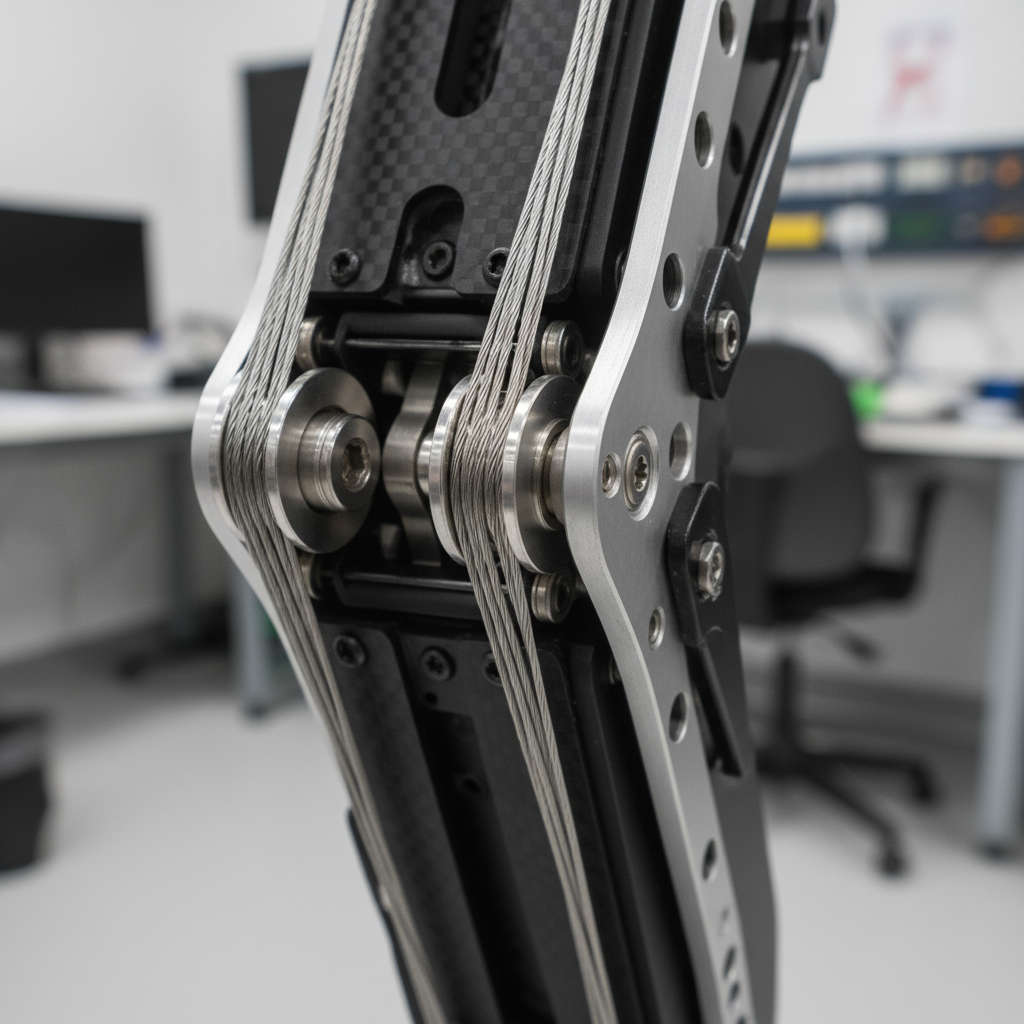
Robot Tendons: Steel Ropes for Humanoids
In the fast‑evolving world of robotics, especially humanoid robots, a hidden component is gaining attention: miniature steel wire ropes acting as artificial tendons. Unlike traditional industrial cables, these thin, flexible ropes transmit pulling forces from actuators to robot joints — mimicking how muscles and tendons work in the human body.
Robotic tendon ropes face unique challenges. They must be extremely flexible to bend around tiny pulleys, have very low elongation for precise position control, and withstand millions of repeated flexing cycles without fatigue failure. Typical constructions include 1x7, 1x19, or 7x7 stainless steel micro-ropes with diameters from 0.3 mm to 3 mm. Some designs use a plastic coating to reduce friction and noise inside the robot frame.
A current hot spot in research is the use of high‑strength steel wires (tensile grades up to 3000 MPa) to achieve higher power density in smaller diameters. Another trend is embedding wear‑sensing fibers into the rope for real‑time health monitoring — essential for medical or service robots interacting with people.
As humanoid robots move from labs to real‑world applications (warehouses, elderly care, hazardous environments), the demand for reliable, long‑life “tendon” ropes is rising. LAFIA WIRE ROPE offers custom‑drawn stainless steel micro‑ropes with precise construction and breaking force, supporting robot designers in creating agile, safe, and durable machines.