Shallow Water Anchor Ropes for Marine Farms
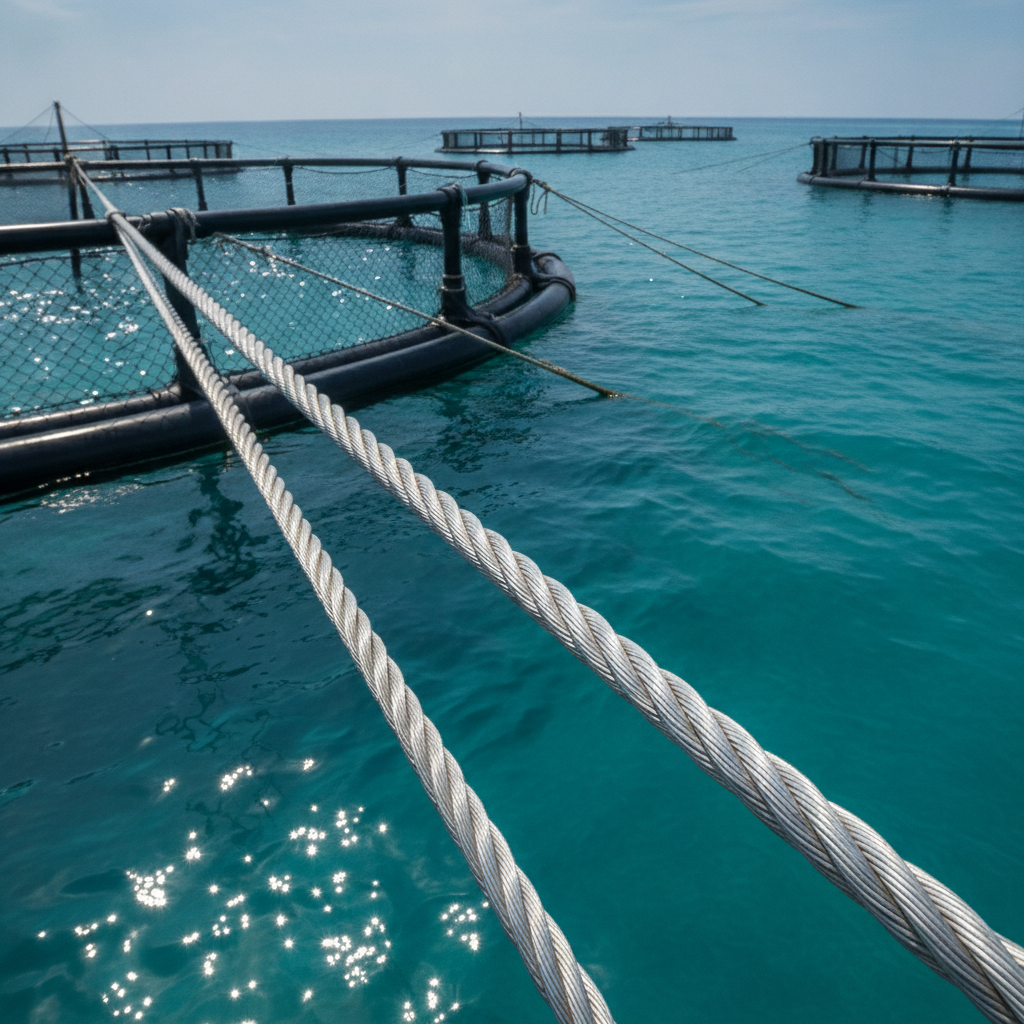
In shallow coastal waters — typically depths under 50 meters — wire ropes play a vital but often unnoticed role. They anchor floating structures such as aquaculture cages, navigation buoys, tidal energy devices, and small work platforms. Unlike deep‑sea mooring, shallow water anchoring faces a different set of challenges: strong tidal currents, wave slap, vessel traffic, and intense biological fouling from barnacles and algae.
Steel wire ropes used in shallow water must balance strength with flexibility. Common constructions include 6x19 or 6x36 classes with an independent wire rope core (IWRC) for good crush resistance during repeated spooling on winches. Breaking strengths typically range from 50 kN to 500 kN, depending on the size of the floating structure. Galvanized coating (heavy‑duty or zinc‑aluminum) is standard to resist saltwater corrosion, but an emerging trend is the use of polymer‑sheathed ropes — a plastic jacket extruded over the steel core. The jacket not only blocks corrosion but also prevents marine growth from attaching directly to the steel, extending service life significantly.
Another industry hot spot is the shift toward hybrid ropes for eco‑sensitive shallow waters. Some projects combine a synthetic core (e.g., HMPE) with a steel outer strand, reducing weight while maintaining abrasion resistance against sandy or rocky seabeds. For small‑scale applications like oyster farm anchors, stainless steel micro‑ropes (3‑8 mm diameter) are also gaining popularity due to their low maintenance.
Regular inspection remains critical: check for broken wires near end fittings, jacket damage, and corrosion at waterline zones where oxygen and salt are most aggressive. With global “blue economy” initiatives expanding marine aquaculture and coastal renewable energy, the demand for reliable, long‑life shallow water anchor ropes continues to rise.
LAFIA WIRE ROPE offers galvanized and polymer‑sheathed steel ropes in diameters from 6 mm to 40 mm, with customized lengths and end terminations — helping coastal operators keep their assets safely in place, season after season.