How Wire Ropes Power the Green Energy Transition
Look up at a wind turbine, a container crane, or a deep-sea mining vessel, and you will find an unsung hero holding it all together: the steel wire rope. Behind every heavy lift, every mooring line, and every elevator shaft lies a product whose engineering has evolved far beyond its 19th-century origins.
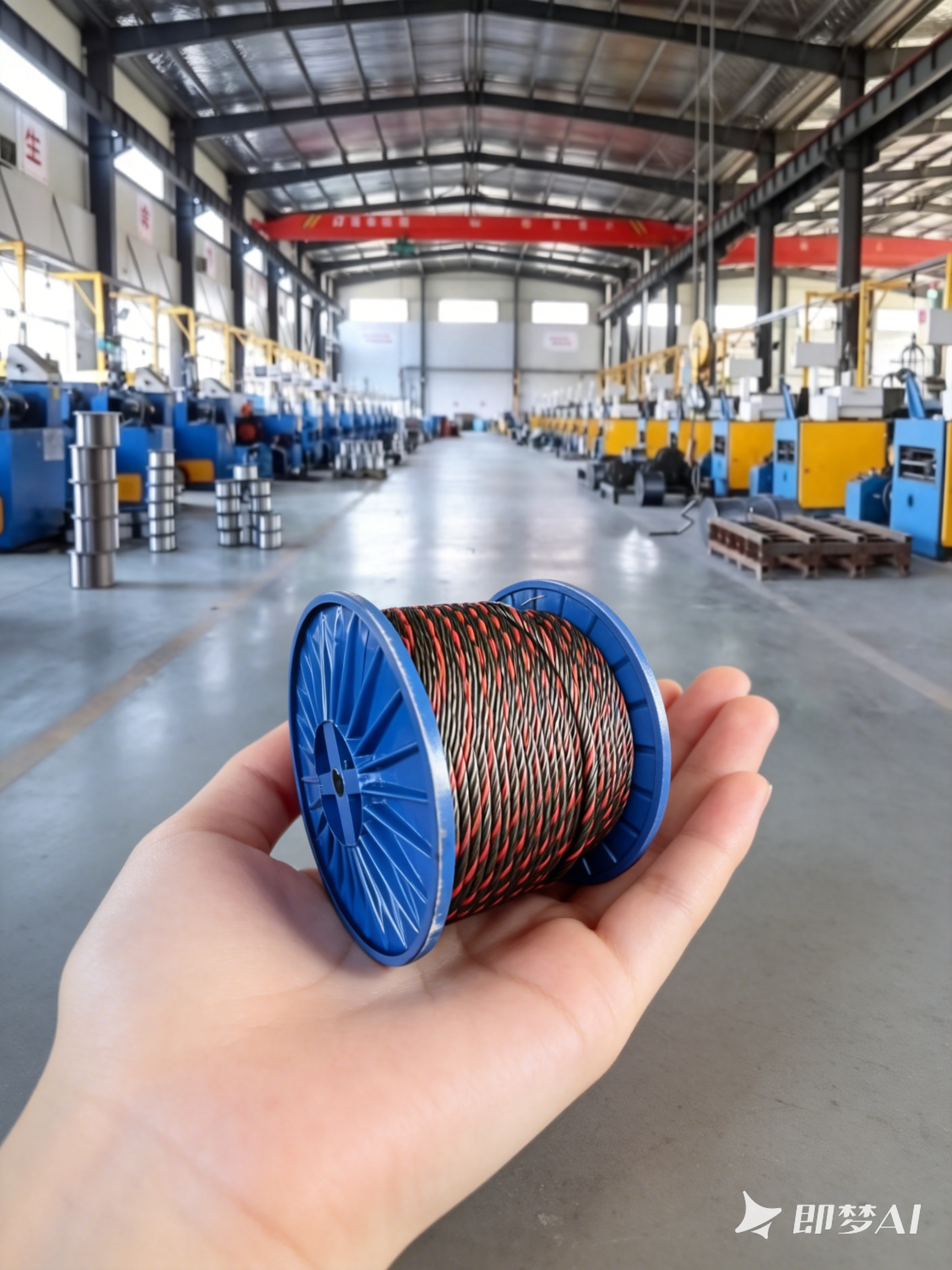
A wire rope is, in essence, a system of layers. Individual steel wires are first twisted into strands, and those strands are then helically laid around a core — either fibre core (FC) for flexibility or independent wire rope core (IWRC) for higher crushing resistance. A common 6×19 construction, for example, combines six strands with roughly 19 wires each, balancing strength, flexibility, and fatigue life. This layered design is precisely what allows wire rope to bend over sheaves and drums while carrying tons of load.
Tensile strength grades typically range from 1570 MPa to 2160 MPa and beyond. Higher grades deliver greater breaking force, but they also demand stricter control over ductility — a rope that is too brittle will fail suddenly under shock loading. That is why reputable manufacturers specify both minimum breaking force and elongation at break.
The global push for renewable energy has created one of the fastest-growing demand segments for high-performance wire rope. Offshore wind turbines now routinely exceed 15 megawatts in capacity, with tower heights surpassing 150 metres. Installing a single nacelle can require crane hooks rated above 3,000 tonnes, and the ropes must perform under salt spray, dynamic sway, and repeated bending.
Corrosion resistance is non-negotiable. Galvanised ropes with zinc-aluminium coatings offer substantially longer service life in marine environments than plain bright ropes. For the most demanding mooring and tensioning systems, polymer-coated and stainless-steel constructions are increasingly specified. Fatigue performance matters equally — ropes on installation cranes may undergo millions of bending cycles over a project's lifetime, making strand geometry and wire ductility critical selection criteria.
A quieter revolution is taking place inside the rope itself. Embedded sensor technology now allows operators to monitor tension, temperature, and wear in real time. Instead of relying solely on periodic visual inspections, maintenance teams can receive alerts when a rope approaches its discard threshold, reducing both downtime and the risk of catastrophic failure.
This shift toward predictive maintenance aligns with broader industry trends. International standards for wire rope condition monitoring are maturing, and major crane and offshore operators are integrating rope telemetry into their asset management platforms. For buyers, the implication is clear: total cost of ownership now depends as much on data capability as on upfront price.
Steel is inherently recyclable, and wire rope is no exception. End-of-life ropes can be melted down and recirculated into new steel products with minimal material loss. On the production side, leading manufacturers are reducing their carbon footprint by adopting low-carbon wire rod, optimising heat-treatment energy use, and closing water loops in pickling and coating lines.
For customers facing their own net-zero targets, these factors are entering procurement decisions. A rope that lasts 30% longer reduces replacement frequency, freight, and waste — a sustainability gain that also improves the bottom line.
When selecting wire rope, buyers should verify three things: certified test reports from independent laboratories, clear traceability from raw wire rod to finished rope, and a supplier willing to recommend the right construction for the application rather than the cheapest option. A rope mismatched to its working environment — for instance, a bright rope used outdoors without proper lubrication — will degrade rapidly and create safety risks.
At LAFIA WIRE ROPE, we manufacture a full range of steel wire ropes and accessories, including galvanised, stainless, and polymer-coated constructions for lifting, mooring, and general engineering applications. Our production lines are equipped with continuous monitoring and full batch traceability, and we work closely with customers to match rope specifications to actual working conditions.
Wire rope may not make headlines, but it makes modern infrastructure possible. As wind farms expand deeper offshore, cranes grow taller, and supply chains demand greater transparency, the humble wire rope continues to evolve — stronger, smarter, and more sustainable than ever.