Stage Machinery: The Hidden Strength Behind the Curtain
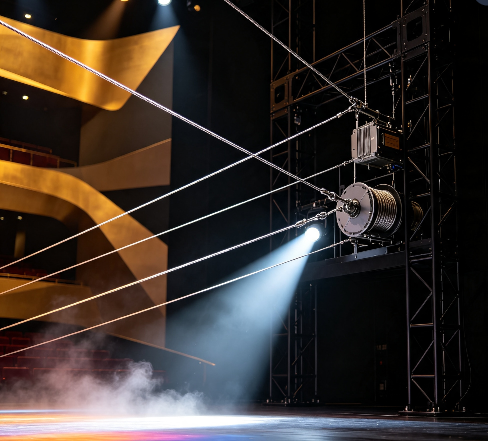
Behind every breathtaking theater performance, concert, or live event lies a complex network of steel wire ropes. These unsung heroes lift scenery, suspend lighting, and even fly performers through the air, all while remaining completely invisible to the audience.
Why Theatre Ropes Are Different
Unlike industrial wire ropes used in construction or mining, stage machinery ropes have a unique requirement: they must be nearly invisible under stage lighting. Standard galvanized ropes reflect light, creating distracting glints and flashes that can shatter the audience's immersion. That is why theatre ropes are typically blackened using a zinc phosphate coating or zinc oxide treatment, giving them a matte black finish that blends into the darkness of the stage.
Common Constructions
The most popular construction for stage applications is 7x19, seven strands, each made of 19 wires. This design offers an excellent balance of strength and flexibility, making it suitable for scenery, lighting rigs, and moving objects. For applications requiring greater rigidity, 7x7 construction is available. Where load stability is critical and rotation must be minimized, 19x7 rotation-resistant ropes are preferred. Diameters typically range from 3 mm to 12 mm, with tensile strengths up to 1960 N/mm².
Safety Factors: A Matter of Lives
In the entertainment industry, safety is paramount. Unlike industrial settings where ropes primarily lift objects, stage rigging often involves suspending equipment directly above performers and audiences, and sometimes lifting performers themselves. Safety factors vary by application: general rigging tasks typically require a 5:1 safety factor, while critical loads such as moving scenery demand 7:1 or 8:1. For performer flying, where a human life depends on the rope, the safety factor must be at least 10:1. The industry standard requires annual inspections of all lift lines by qualified riggers.
The D/d Ratio: A Critical but Overlooked Factor
One of the most important design considerations in stage rigging is the D/d ratio, the diameter of the sheave or pulley divided by the diameter of the rope. This ratio determines how severely a rope is bent during operation. A smaller ratio means tighter bends, higher stress, and significantly shorter rope life. For wire rope in theater applications, the recommended minimum D/d ratio ranges from 16:1 to 30:1. Industry recommendations suggest at least 20:1 for counterweight systems. Ignoring this factor can reduce rope strength by 20 to 25 percent and cut service life in half.
Industry Trends: Smart Monitoring and Automation
As live entertainment becomes increasingly sophisticated, stage machinery is embracing automation and smart monitoring. Motorized hoists with real-time load sensors, automated scenery movement systems, and integrated rigging management platforms are becoming standard in major venues. Some systems now incorporate sensors that track rope condition, detecting wear and fatigue before failure occurs. This shift from reactive replacement to predictive maintenance is transforming how theaters manage their rigging systems.
The Growing Market
With the global entertainment industry rebounding strongly, demand for stage machinery wire ropes continues to grow. From Broadway to touring concerts, from theme park shows to corporate events, the need for reliable, high-quality theatre ropes has never been greater.
LAFIA WIRE ROPE supplies blackened steel ropes for stage machinery and theatrical rigging, with custom diameters, constructions, and lengths to meet the most demanding entertainment industry standards.