The Hidden Cables Inside Your Furniture
When you adjust the height of your standing desk, slide open a wardrobe door, or pull out a heavy drawer without the cabinet tipping over, a small but essential component is quietly at work: the steel wire rope.
Unlike the massive cables used in cranes or bridges, furniture wire ropes are slender, flexible, and precision-engineered. They typically measure just 1 to 6 mm in diameter and are made from stainless steel for corrosion resistance and long service life. Common constructions include 1x7, 1x19, 7x7, and 7x19 configurations, each chosen for its specific balance of flexibility, strength, and fatigue resistance.
Where You Find Them
In height-adjustable desks, steel wire ropes are integrated into the lifting columns, transmitting force from the electric motor to raise and lower the desktop smoothly. A recent patent addresses a common issue with these systems: cables inside the lifting column can generate noise due to excessive shaking during operation. Engineers have developed spiral cable designs that reduce vibration and ensure quiet performance.
In sliding door systems for wardrobes and cabinets, wire ropes form the core of cable pulling devices that guide doors along furniture walls. These systems use tensioned cables with deflection rollers to ensure smooth, jam-free operation.
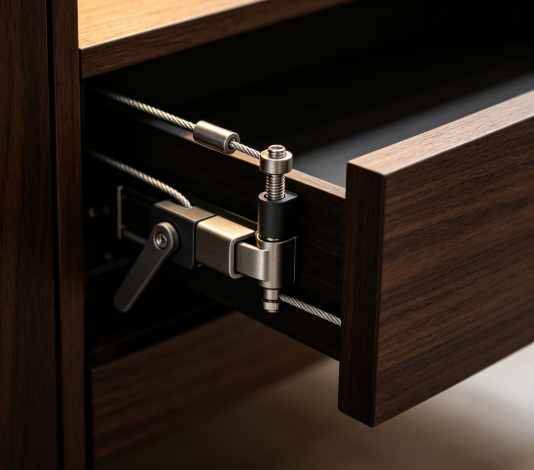
Drawer interlock systems are another critical application. When you pull out multiple drawers in a tall cabinet, a wire rope interlock system prevents more than one drawer from opening at a time, stopping the furniture from tipping over. The cable is coupled to each drawer with precisely calculated slack, allowing one drawer to open while locking the others. This simple but ingenious mechanism has saved countless accidents in homes and offices.
Beyond Mechanism: Furniture as Structure
Perhaps the most exciting trend is the use of wire ropes as structural elements in furniture design. The Loop Table, longlisted for the Dezeen Awards 2025, is a solid oak dining table assembled entirely without glue. Its individual wooden planks are tensioned together by wire ropes, which also connect the tabletop to the legs. The result is furniture that is 100 percent circular: the wood remains in the biological cycle, while the steel can be returned to the technical cycle.
Designers are also repurposing retired climbing ropes, which retain their strength and flexibility even when no longer safe for climbing, into lounge chairs and seating. The On Belay Lounge Chair, a Bronze Design Award winner for 2025-2026, weaves these ropes into seats and backrests, providing adaptive support while extending the material's lifecycle.
Industry Trends
The stainless steel wire rope market is growing steadily, with a projected CAGR of 4.6 percent through 2030. In furniture, three trends are driving innovation.
Sustainability: Designers are seeking circular solutions. Wire ropes enable glue-free assembly, making furniture easier to disassemble and recycle. Repurposed ropes from climbing or industrial applications are gaining traction.
Smart furniture: As homes become more connected, wire ropes are being integrated with sensors to monitor tension and wear, enabling predictive maintenance.
Minimalist aesthetics: Thin stainless steel cables offer strength without visual bulk, supporting the clean, minimalist look that dominates contemporary furniture design.
From the desk you work at to the wardrobe you open each morning, steel wire ropes are the hidden enablers of modern furniture, small in size, but essential in function. LAFIA WIRE ROPE supplies precision stainless steel wire ropes for furniture applications, with custom diameters, constructions, and lengths to meet the demands of designers and manufacturers worldwide.