The Unseen Workhorse of Modern Agriculture
When you picture a modern farm, you might think of tractors, combines, and automated feeding systems. But behind many of these machines, pulling, lifting, securing, and driving, is a component that rarely gets noticed: the steel wire rope.
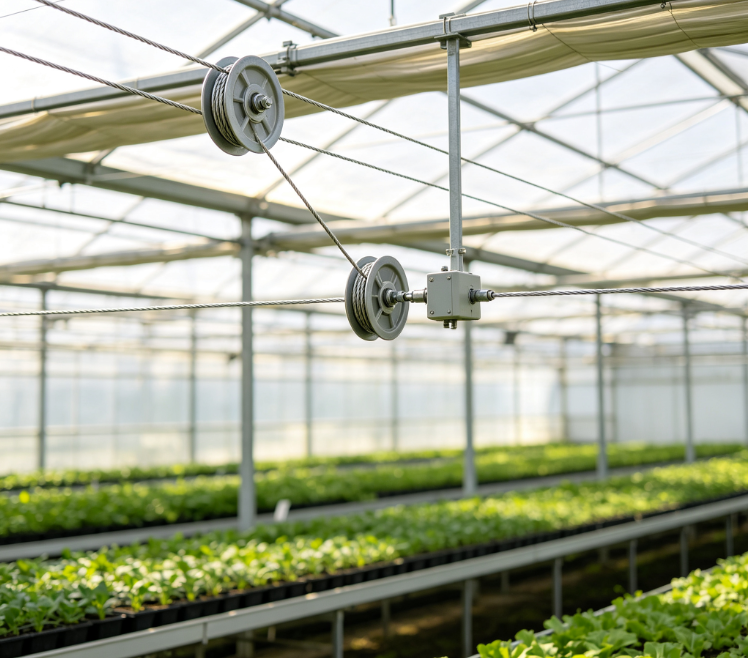
From the combine harvester in the field to the automated feeding system in the poultry house, wire ropes are the unseen workhorses of modern agriculture. They bind, secure, and connect equipment and supplies, operating under conditions that would challenge any industrial component: constant exposure to water, agricultural chemicals, mechanical damage, and harsh weather.
Wire Ropes in Agricultural Machinery
Modern farm machinery relies heavily on wire ropes and cable assemblies. Harvesters, the machines that gather ripe crops during the critical harvest season, depend on a series of wires and cables to function properly. A broken cable during harvest can mean costly downtime when there is no time to waste.
Balers, the machines that compress hay, straw, or silage into compact bales, use wire rope in their tying mechanisms. The rope tensions and secures the binding material around each bale, ensuring it holds together during storage and transport. Irrigation systems also rely on cable assemblies to distribute water across fields, requiring consistent performance in persistently moist environments.
Beyond these, wire ropes are found in farm vehicles, trailers, storage facilities, and countless mechanical assemblies that require supporting loads, secure tie-downs, lifting, pulling, and even creating barriers and fencing.
The Rise of Automation in Livestock Farming
Perhaps the most exciting developments are happening inside modern livestock facilities. As farming becomes more automated, wire ropes are playing an increasingly central role.
In poultry farming, hoist systems use steel wire ropes to raise feeding and drinking lines simultaneously with the push of a button. Galvanized or stainless steel wire ropes, typically 3 to 5 mm in diameter with 7x19 construction, ensure long service life in demanding environments. These systems save time, reduce labor, and improve animal welfare through precise control.
In sheep and cattle operations, wire ropes are the backbone of automated belt feeding conveyor systems. These systems, controlled by programmable logic controllers, use steel ropes and belt traction components to automate feed transport and precise delivery. The result is significantly improved efficiency, reduced labor costs, and minimal feed wastage.
Waste management has also gone automated. A new generation of steel wire rope scrapers, specifically designed for livestock waste cleaning, is transforming how farms handle manure. These systems consist of scrapers, high-tenacity galvanized wire ropes, drive units, guide devices, tensioning systems, and smart controls. The wire rope, chosen for its corrosion resistance and wear resistance, drives the scraper along the waste channel. With intelligent control systems, operators can set cleaning schedules, travel distances, and forward-reverse cycles, achieving fully automated, unattended operation. The result is cleaner facilities, reduced disease risk, and significantly lower labor costs.
Industry Trends: Smarter and More Sustainable
Several trends are shaping the future of wire ropes in agriculture. The global agricultural rope market is expected to grow from 4.08 billion USD in 2025 to 5.5 billion USD by 2035, driven by rising agricultural mechanization and innovations in rope technology. The broader steel wire rope market is estimated at 10.49 billion USD in 2025, projected to reach 13.88 billion USD by 2030.
Sustainability is a major driver. Farmers and equipment manufacturers are increasingly demanding ropes that balance tensile strength with corrosion resistance while also considering end-of-life recycling pathways.
Smart monitoring is another emerging trend. Sensors and RFID technology are beginning to find their way into agricultural wire ropes, enabling real-time condition monitoring and predictive maintenance. This shift from reactive replacement to proactive management is particularly valuable during peak seasons when downtime is most costly.
Material innovation continues to advance. While galvanized steel remains the workhorse for its corrosion resistance and durability, coated cables, including vinyl, nylon, polyethylene, and polypropylene options, offer specialized protection for specific agricultural environments.
A Quiet Revolution
From the combine harvester bringing in the harvest to the automated scraper keeping the livestock barn clean, steel wire ropes are quietly powering the modernization of agriculture. They are small in size, often hidden from view, but essential to the productivity and sustainability of the farms that feed the world.
LAFIA WIRE ROPE supplies galvanized and stainless steel wire ropes for agricultural machinery and livestock farming applications, with custom diameters, constructions, coatings, and lengths to meet the demands of modern agriculture.